
What Dolores Huerta Teaches Us About Disclosure & Privilege
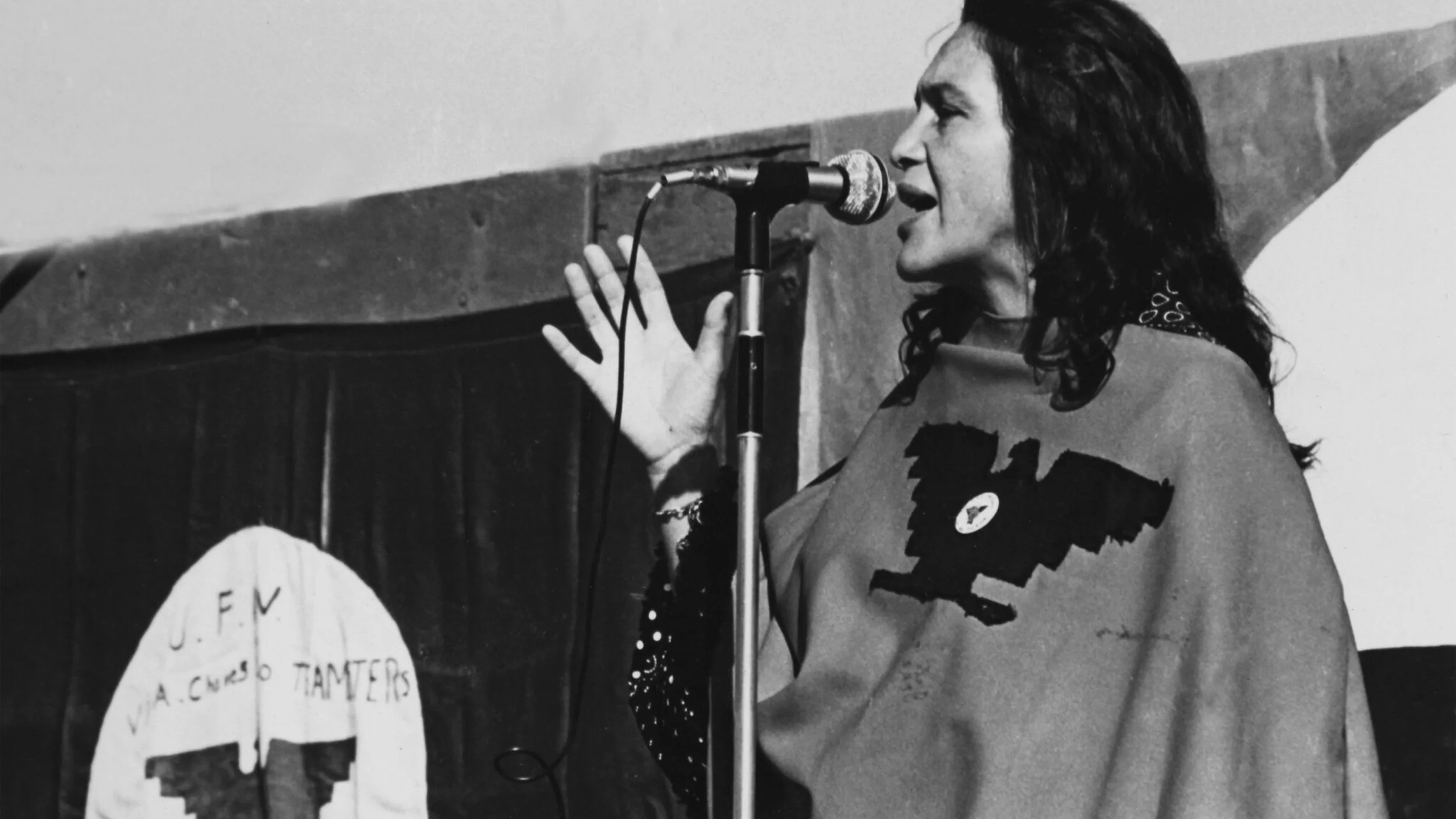
Dolores Huerta speaks at UFW rally
Over 90% of Lumina Alliance employees report that they, or someone they know, has experienced sexual assault or domestic violence.
Ninety percent.
Lumina is an organization built around support, healing, advocacy, and prevention. A place where we talk openly about safety, about resources, about what it means to seek help. A place where we work to de-stigmatize being a victim of sexual assault and intimate partner violence and domestic abuse to ease the shame. And still, even here, among people who passionately believe survivors always, most of us do not know each other’s stories.
We each carry our survivor-ness in deeply personal ways.
Some of us are very open and can speak candidly about our experiences. Others keep our survivor-ness behind a wall, because privacy can be protection. Because silence, sometimes, feels safer. We all find ways to cope so we can show up. For our coworkers. For our clients. For our friends and families.
And that is coming from an organization where we talk every day about the strength it takes to seek help. We say, clearly and often, that healing is possible. Every single person here is working toward the same goal, to make this community safer and more equitable for everyone. We are all state-certified, 65-hour Sexual Assault and Domestic Violence Peer Counseling trained. Whether we work directly with survivors or, like me, lead communications, we carry that message forward.
And still, we are human.
We are people with complex relationships to the harm we have experienced. People navigating memory, identity, safety, and healing in real time.
So if survivors within Lumina Alliance, in a space intentionally built for support, still have complicated and deeply personal relationships with disclosure, then you can imagine what it looks like in environments that are less safe, less inclusive, less resourced.
You can imagine the weight.
That brings me to Dolores Huerta.
The reality is that too often, survivors are carrying more than their own healing. For women like Dolores, in farmworker, immigrant, and other marginalized communities, the barriers to reporting can be overwhelming. Fear. Stigma. Language access. Immigration status. Economic instability. Lack of trusted resources. Each of these is not just a barrier, but a calculation.
What will this cost me?
We stand with Dolores, and survivors like her, who chose silence in what may have felt like service to a greater cause. Too often, survivors are not simply deciding whether to speak. They are weighing the impact of coming forward against everything it could disrupt.
Their family.
Their partner.
Their career.
Their community.
Their movement.
Their financial stability.
This is the part that is often left out of the conversation. Coming forward is not just an act of courage. It is also an act shaped by access, safety, timing, and support. It is, in many ways, a privilege. A privilege that not everyone can afford emotionally, financially, or in terms of safety.
And that truth can sit uncomfortably alongside movements we respect and leaders we admire.
We can recognize the profound impact of the farmworker movement while also fighting for accountability. Supporting a movement does not mean protecting harm. Honoring legacy does not require silence around the experiences of survivors.
Both can be true.
This is also a moment to uplift organizations that have been doing this work, often without recognition. Groups like the Bandana Project and Líderes Campesinas have long supported farmworker women through organizing, storytelling, and connection to resources. They understand the nuances. They understand the risks. And they meet survivors where they are.
At Lumina Alliance, we do the same.
We support survivors who choose to speak. We support survivors who choose not to. We support survivors who are still deciding. There is no single right way to carry survivor-ness. There is no timeline that defines healing. There is no expectation that disclosure is required for validation.
What there is, is support, belief, a commitment to building a world where survivors do not have to choose between their safety and their voice.
At Lumina Alliance, we stand with survivors. Always.
 QUICK EXIT: